Thursday, April 30, 2020

The Lunchbox (Dir. Ritesh Batra, 2003)

(Reviewed 4/5 on letterboxd.com April 2020)
Watched this in memory of Irfan Khan; the specialty of Irfan the actor clearly was in his ability to shun melodrama and rely mostly on his ability to react which made his skill sets suitable for film. His ability to emote can be clearly contrasted with his co-actor Nawazuddin who I would argue is a more versatile actor. Irfan was a director’s actor, like an Indian Chishu Ryu, who understood his limitations which is rare to find in mainstream Indian cinema. His role in this film is probably the highlight of his career although the film itself could have benefited from avoiding the semblance of a happy ending.
To the films credit, it’s delightful use of montage, the sparseness of dialogue; excellent use of space - which is a commodity whether at homes, streets or public transport; the abundance of people but lack of true friends; the constant money woes and finally the insightful letter writing give a fairly accurate and bitter sweet portrait of life in Mumbai city.

Le Bonheur (Dir. Agnes Varda, 1965)


(Reviewed 4/5 on letterboxd.com April 2020)

Varda’s reinterpretation of F.W Murnau’s silent Sunrise (1927) and the biblical Adam/Eve story in the context of the 1960's sexual revolution.
This film rejects the black and white dichotomy of the characters of the older film and instead portrays the skewed sexual dynamics in the sometimes beautiful and other times sickening color palette where even in the modern age, the women will come and go like the change of seasons; the men will remain, basking in their delusions of love and double standards of fidelity against the sometimes uplifting and other times foreboding strains of Mozart. The devil, if any, is in the man.

Friday, November 16, 2018

Ghanchakkar (Dir. Raj Kumar Gupta, 2013)

(Rated 4.5/5 on letterboxd in Nov 2018)

Emraan Hashmi's seriously amnesiac thief and the helplessness of people around him create some great absurdist comedy and a surprisingly taut suspense thriller. Amit Trivedi's pulsating background music make this even more delectable.
Oh and who acted in Ghajni, again? That one moment of collective amnesia is just priceless. 

Sunday, February 11, 2018

Ae Dil Hai Mushkil (Dir. Karan Johar, 2016)

(Reviewed 3.5/5 on letterboxd.com in Feb 2018)


No Mr. Johar, not every Bollywood fan aspires to live out scenes and songs from Chopra and Johar films. Despite the self congratulatory tone of the film, it exceeds expectations mainly through the performances of Kapoor and Sharma. Also towards the end when I was almost certain Johar was getting into Kal Ho Na Ho territory , he surprised me once again with that ending. An extra half star just for that Channa Mereya song sequence at the wedding; no Kapoor has channeled his inner Chaplin better than in that scene.

Tuesday, February 6, 2018

Rajnigandha (Dir. Basu Chatterjee, 1974)

(Reviewed 4/5 on letterboxd.com in Feb 2018)


A film about the desires and fantasies of a young bourgeois woman, trying to decide between the two loves of her life. Quite ahead of its time, even though it tries its best not to appear completely blasphemous to the contemporary Indian society of the 70's. I think Vidya Sinha's conservative and dreamy (bordering on dumb) character definitely helps in that regard.

Saturday, January 20, 2018

Dawn Patrol (Dir. Howard Hawks, 1930)


(Reviewed 4.5/5 on letterboxd.com in Jan 2018)

Richard Barthelmess carrying a full grown man on his shoulder and then almost carrying off a mission single handedly as a squadron commander. I can believe almost anything this guy ever did onscreen.

Sunday, October 22, 2017

The Hypothesis of an Artwork

My young friend Radhika surprised me with her artwork today. I tried paraphrasing our conversation below:

"Did you draw this for me?", I asked.

"Yes" - she said.

"Who is this?", I asked, pointing towards the largest human figure.

"That's you", she said.

"What about this girl?", I asked, pointing towards the small human figure in the sketch.

"That's me", she said.

"Is that a butterfly?", I asked pointing towards the insect like figure on the left.

"NO!, that's a dragonfly; THIS is the butterfly", she said pointing towards the other insect like figure.

"The dragonfly goes over your head, under the butterfly and the butterfly flies over and sits on the floor", she said, describing the motion in the dotted lines near the insects.

"Wow, that's amazing! Why do I look like a scarecrow?", I asked; she dismissed my stupid question.

"Look at the back", she said pointing towards the big alarm clock.

"Is this your clock? What time do you wake up?; It looks like 4pm", I said reading out loud.

"Why is it that your 3, 2 and 9 are mirror images of the numbers", I asked another stupid question.

"That's how I write them", she said dismissing my question.

"But that's not correct, you know that right?", stupid question number infinite at this point.

"Yes, but that's how I want them", she said with her beautiful smile.

"Is this for me? Can I keep this?", I asked her.

"Yes, its' for you", she said.

After this we went downstairs to play some jigsaw puzzle. I ate a delicious meal at her place and like an idiot forgot to take the artwork with me. I asked her mom to send me a photo of those drawings. Now, I can't stop looking at them.

They say Picasso drew like a child even after growing up. His figures had no sense of proportion; it was purely his feelings that came out in his countless sketches and paintings; people say they did not understand it, it was modern art when frankly it was real art unaffected by the dogma of form and art school.


Radhika's gift for me had figures with no conventional sense of proportion except as her minds eye perceived them. The male figure i.e me is the largest figure on her canvas and the centerpiece of the artwork. She wants me to feel important and after all it's a gift! She stands next to me in what I would interpret as a happy position and at the same time taking authorship for the work. The insects add a dynamic to this artwork; there is a sense of motion in this still life which adds an excitement to it. The dragonfly flies over my head, the butterfly flies over the dragonfly and sits on the grass. The tree is small, giving the drawing a sense of depth in field or maybe it's a plant with its leaves stretched out just like the humans have their hands; nature is clearly in unison with humans here. Radhika's world appears large and she has a place for me there! The sun is shown partially, the whole drawing is as if seen through a lens; there are things within the frame and then there are things outside it! Again, a sign of endless possibilities.


The alarm clock has some inverted numbers and that's how Radhika believes they should be in this drawing! She realizes that they don't meet the convention but who cares about conventions in an artwork? The time in the clock is open to interpretation; it could be 4am or 4pm. There are diagonal red lines outside the clock indicating the sound of the alarm!; her mom told me that they brought an alarm clock for her recently and she is fascinated by it. I am glad that she has gifted me her image of the alarm clock by drawing it on the other side of the scene of bliss. I could even take it as the transience of everything in life. Time is after all the fourth dimension that defines our existence.
I won't read into it that much though. I am just glad that my young friend gifted me this! I decided to return the favor by giving it a place on my blog.


Monday, October 16, 2017

The Day After (Dir. Hong Sang Soo, 2017)


(Reviewed 4.5/5 on letterboxd.com in October 2017)


Hong tackles the sensitive subject of extra-marital affair by using humor to show the absurdity of the situation and especially that of the players. One character talks about having faith, one accuses the male protagonist of being a coward, and that character herself is a hypocrite. The cowards and hypocrites are caricatures that cry out loud and will even admit to their cowardice over a drink of soju. Fortunately, the character with faith including the male protagonists wife will survive and even manage to bring a change in the Coward. Hong's caricatured portrait of this trio gives a larger world view of how societies with faiths have survived centuries unlike many other liberal and licentious endeavors. When you have the attitude that everything is beautiful and that everything happens per God's will, the ignorance will continue to keep you in bliss as it has done for societies over countless millennia. Whether you agree with them or not, these people will survive and more often more peacefully than those without faith.

Saturday, October 14, 2017

On the Beach at Night Alone (Dir. Hong Sang Soo, 2017)

(Reviewed 5/5 on letterboxd in October 2017)


Hong's most emotionally wrenching film since Remembering the Turning Gate. I haven't liked his films with female protagonists as much until this one. The drinking/smoking session scenes are less than usual but way more effective. Also got to admire Hong's use of surrealism in humor; never fails to tickle the funny bone. The waves of emotions I felt at the end were so many, i felt like caressing my head like that flower Kim caresses in one of the scenes.

Sunday, October 1, 2017

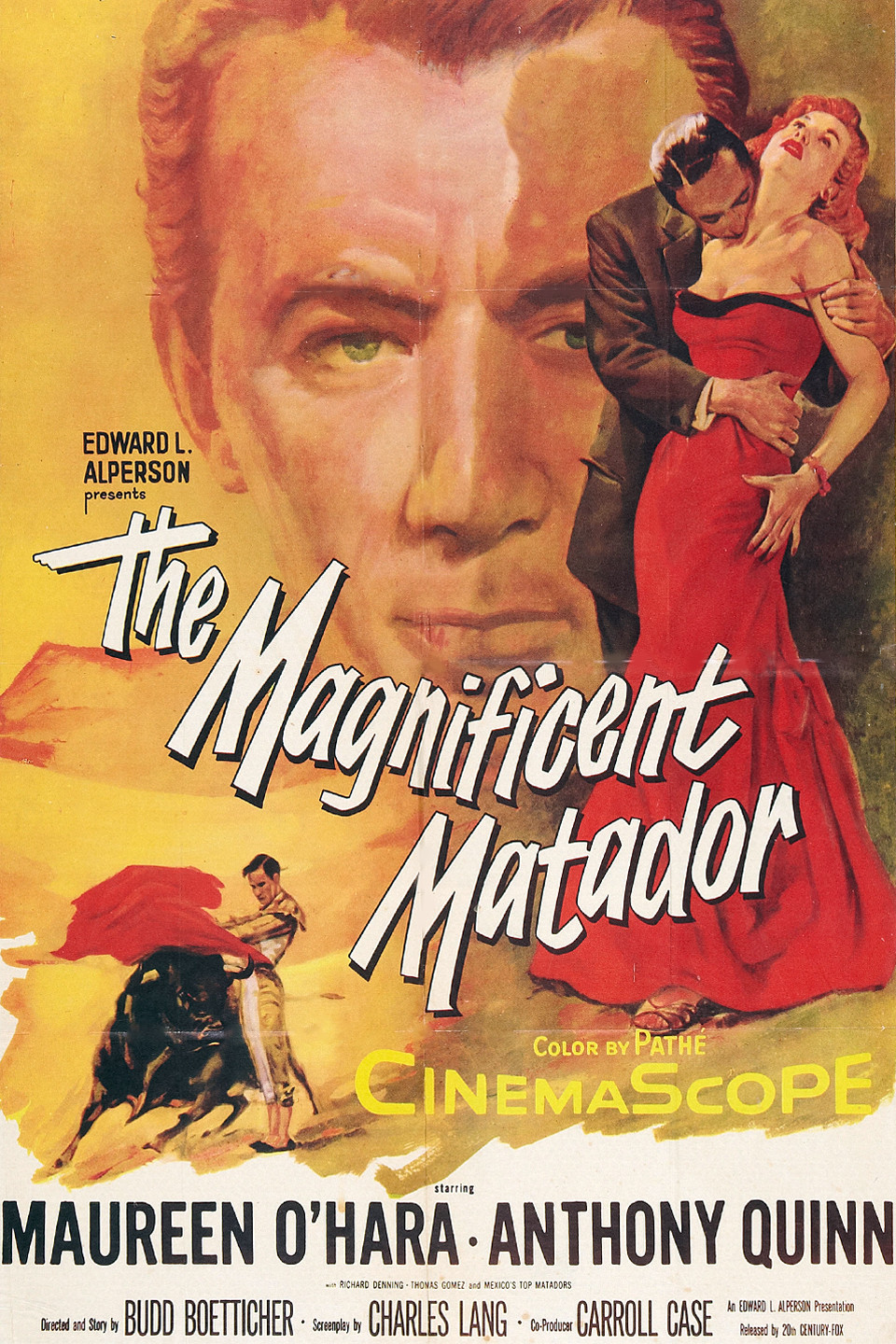
The Magnificent Matador (Dir. Budd Boetticher, 1955)


(Reviewed 4/5 on letterboxd.com in Oct 2017)


Boetticher shoots bullfight sequences from a tatami mat and makes you wait for it. Add to it two of my favorite Hollywood actors. Just magnificent sexiness. Oh and gotta love that poster!

Sunday, May 21, 2017

Horace and Pete (TV series, Dir. Louis C.K., 2016)


(Reviewed 4.5/5 on letterboxd in May 2017)

This is a review of a TV series, an exception from the norm for me. After watching this I realized what I am missing out on. I mean, this is clearly the era of the TV series and there are some real gems out there that need to see the light of day.

With Horace and Pete, I also continue my exploration into Louis C.K.'s works. I was very impressed with his debut film and this TV series confirms my belief in the man's talent.

It would be difficult to classify Horace and Pete in any form of a genre. If at all, it is a tragedy or a comedy, depending on the way you look at it. It is definitely nothing close to C.K's subject's in stand up routine. In fact if you dig deeper, this series is a love story between two brothers who own a hundred year old family bar in Brooklyn.

C.K shoots almost the entire series in two locations: the bar and the room they live upstairs. TV series are generally an actor's medium and C.K has a cast of excellent character actors. Although in TV, there is a tendency to shoot close up's and over the shoulder, C.K allows the camera to sit in one location to absorb the the surroundings of the ancient bar, making it one of the character's of this drama. The scene's shift from a group of character's to another seamlessly as we continue to witness the conversations of the customers and the tragedy that keeps unfolding in the lives of the bar owners.

C.K experiment's with his screenplay by going off on tangents until he surprises us by tying it into the main narrative. C.K is not afraid to showcase the racism, homophobia,  transsexuality,  mental illness that is part of society, giving the scenes a brutally honest feel; a trait that I feel comes across in most of C.K's work and interviews. Character's are vulnerable to violence, foul mouthing, sadism, outright meanness and acts of kindness which will simultaneously make you cringe and teary-eyed with joy.

To conclude, don't watch this if you are expecting a laugh out loud comedy. Watch it if you want to see a good tv series with a competent auteur at work. If for nothing else, watch this for Alan Alda and Steve Buscemi. It's rare for actors of their calibre to get roles like these.

Sunday, May 14, 2017

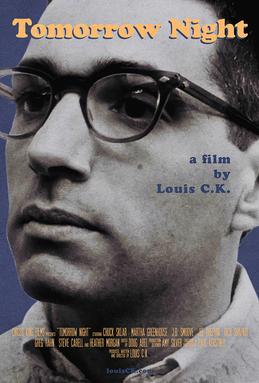
Tomorrow Night (Dir. Louis C.K., 1998)

(Reviewed 4/5 on letterboxd in May 2017)


Weirdly titled black comedy with oddball characters, sado-masochistic humor, surrealistic tones and fetishes. Engaging and funny for the most part, Louis C.K. shows the mark of an auteur in the making. Also the choice of faded out black and white cinematography turns out to be very appropriate for the tone of this film.

Tuesday, April 25, 2017

Silence (Dir. Martin Scorsese, 2016)

(Reviewed 4/5 on letterboxd in April 2017)

Scorsese in his own words called this film as hoping to open up a dialogue about faith beyond the realms of organized religion and to show that doubt is very much a part of faith. This is an extremely rich film with beautifully portrayed characters; especially on the Japanese side, considering the nature of the story.  The last scene which has been subjected to a lot of discussion in previous reviews felt like a "Rosebud" kind of moment in it's enigma. I will definitely need a re-watch to appreciate all it's ideas however it was very helpful to listen to Scorsese share his intent behind making the film right after the screening at MOMI.

Sunday, April 16, 2017

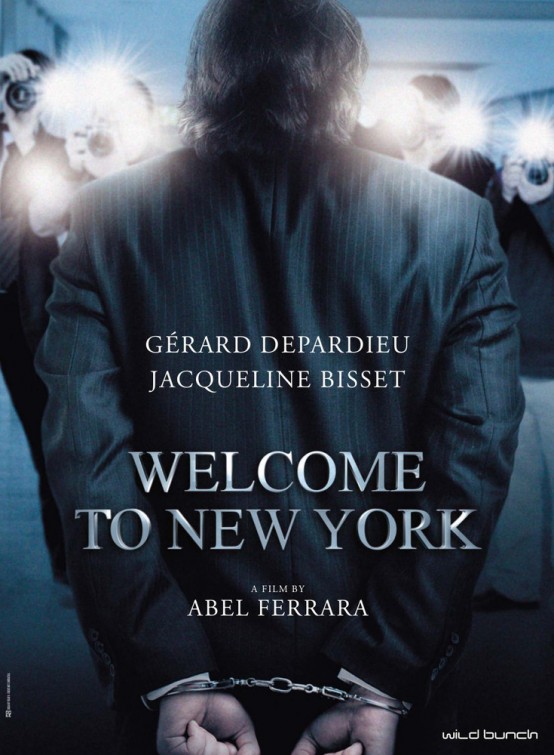
Welcome to New York (Dir. Abel Ferrara, 2014)


(Reviewed 4/5 on letterboxd in April 2017)

Feels even more relevant after the U.S. election. A sleazy billionaire in a position of power knows he can get away with pretty much anything. Ferrara makes the audience complicit (Pasolini style) by titillating it with the debauchery and later having the protagonist confess to his daughter that neither could she have made him stop nor did he have any intention to stop; then he looks into the camera and tells people to fuck themselves and ironically this does not come as a shock to us. "The irony is that no one wants to be saved", declares Depardieu's character to his psychiatrist, and you cannot help but agree with him.

Saturday, April 15, 2017

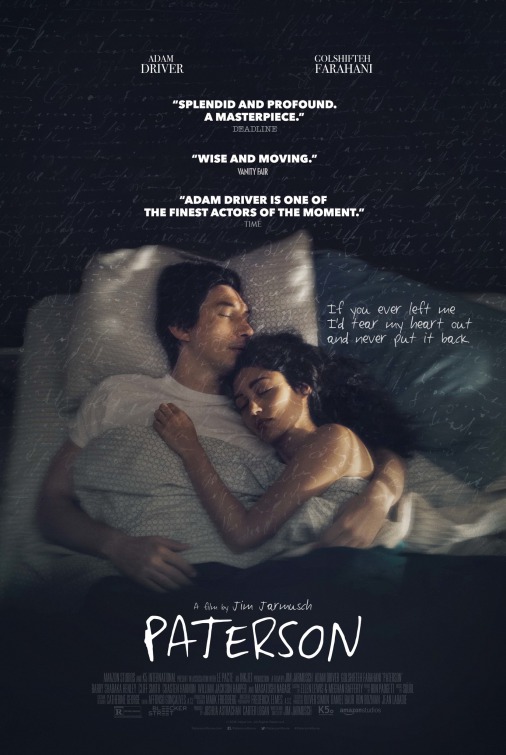
Paterson (Dir. Jim Jarmusch, 2016)


(Reviewed 4.5/5 on letterboxd in April 2017)

People usually don't like films about genuinely nice people; I seem to prefer them. Paterson is one of those nice guys who also happens to be a poet. While his colleagues and friends keep complaining about their lives, Paterson can't ask for more. He has a beautiful girl friend who he says "understands him very well". He has his secret notebook in which he writes words that come to his mind. He prefers not to call himself a poet; he is only a bus driver. For his girlfriend though, he is a poet and she keeps entreating him to make copies of his poems lest they get lost. Paterson also shuns technology and refuses to even carry a smartphone. Jarmusch finds great possibility in this basic premise and through his character's keen eyes and ears, finds poetry in the most unlikely places of a mundane New Jersey town with no personality. Therefore there is poetry to be found in laundromats, curtains, bedrooms, bars, streets, matchboxes, water falls, buses and even in the blank pages of a notebook. As one of his character reveals late in the film - "blank pages reveal endless possibilities" and Jarmusch surely knows how to use them.

Monday, March 27, 2017

Miss and the Doctors (Dir. Axelle Ropert, 2013)


(Reviewed 4.5/5 on letterboxd in March 2017)


One of those heartwarming films that make you wish you could inhabit some of the places on screen or could have simply known some of the characters ala a Yasujiro Ozu film.

Sunday, February 12, 2017

The Quince Tree Sun (Dir. Victor Erice, 1992)

(Reviewed 4.5/5 on letterboxd in February 2017)


"I too work with intensity. Time is precious. I work non stop now" - Enrique, the painter.

Erice reflects on the vanity of much of human endeavor, especially that of the artistic nature. In this film, the masons and the artist begin their work around the same time. While the masons will finish their task and leave, the artist's painting never gets finished. Somehow this film reminds me of an oft quoted philosophy from the Bhagvad Geeta: "To work is in our hands, attaining the fruits of labor is not". That's pretty much what most characters in this film do, continue to work as they race against their own mortality. Even so, there will always be another spring and new fruits for humanity to attain.

The Last of the Fast Guns (Dir. George Sherman, 1958)

(Reviewed 4.5/5 on letterboxd in Jan 2017)


Another gem discovered thanks to the letterboxd community. This was my first Sherman so came to this without any expectation. As others have remarked, I was impressed by the austere screenplay, great cinematography (the Mexican milieu is very convincing) and sparse but effective dialogues. The highlight of this film is definitely the great homo-erotic chemistry or male bonding between Bradley and Miles. Definitely a film I would like to re-watch in the future.

Sunday, December 25, 2016

Dangal (Dir. Nitesh Tiwari, 2016)


(Reviewed 4/5 on letterboxd in Dec 2016)

Bollywood has clearly found a liking for sport biopics. Ever since Chak De India (2007), there have been a spate of films on this theme. I haven't watched all of them but I will not be surprised if Dangal is perhaps the only worthy successor to Chak De.

Now, Bollywood loves melodrama and jingoism, so much so that it will turn to these emotions even if not intended at the beginning. SRK's Kabir Khan, who at the beginning of Chak De is shown driven to take revenge against the ignominy suffered during his playing days, finally gets his ambition reduced to ultra-patriotism. Similarly in Dangal, we have Aamir's Mahavir Phogat determined to have his daughters fulfill his ambition of winning a gold medal, not as a personal ambition but for the country. He even tries to explain the importance of winning gold to his daughter on the eve of the final of the Commonwealth games, explaining the influence she would have on the condition of women in India. He says this after making the more important point of striving for the best and not settling for the second best as is often observed in Indian sports. The prior dialogue is an unrealistic moment in the screenplay, typically introduced in Bollywood films to give a social message. It is a peculiarity of Bollywood films that I have learnt to ignore over the years.

What is it then that works in this fim; first of all the depiction of the trials and tribulations of the Phogat girls, fighting all patriarchal prejudices and inculcating extreme self-discipline as they develop into national level wrestlers. This was an aspect that we did not get to see in detail in Chak De.

The fight against the personal demons of the principal characters is perhaps better delineated in Chak De compared to Dangal. SRK's Kabir Khan is clearly better fleshed out compared to Aamir's Phogat who relies more on his physical transformation than his acting prowess. The other principal characters, especially the girls, are competent enough in their portrayals and evoke strong reactions through their performances.
The wrestling sequences are well shot, making the sport of women's wrestling appear as tough as it actually is. The fight scene between the wrestler father and daughter is devastating to say the least. The scenes often give you a real time ringside view of the action, making your back twitch with anticipation.

The film to a great extent remains understated and focussed. The moments of comic relief are typical Bollywood but do not distract significantly from the plot. The songs are again similar; apart from the wedding song, none feels totally unnecessary to the narrative. The title track has this "Omkara" vibe to it which, to music director Pritam's credit, is a good song and works well for this movie. Case in comparison, it's way better than the annoyingly jingoistic Chak De India track.

Finally, Dangal like Chak De India has a strong connect to the audience due to the real life significance that these stories had on women's sport in India. I expect this film, like Chak De India, to be a landmark film for Bollywood.

Sunday, November 27, 2016

The Searchers (Dir. John Ford, 1956)


Never understood why I keep coming back to this film. Maybe it's the last scene or maybe I just like seeing John Wayne's racist confederate soldier getting deconstructed and finally outcast; maybe I like Ward Bond showing Wayne his place time and again and yet respecting him at the same time; maybe I just love the way Vera Miles carries herself in this film or maybe it's just the photography and the colors. On second thoughts, I think it's just the last scene and everything else.