Sunday, October 30, 2016

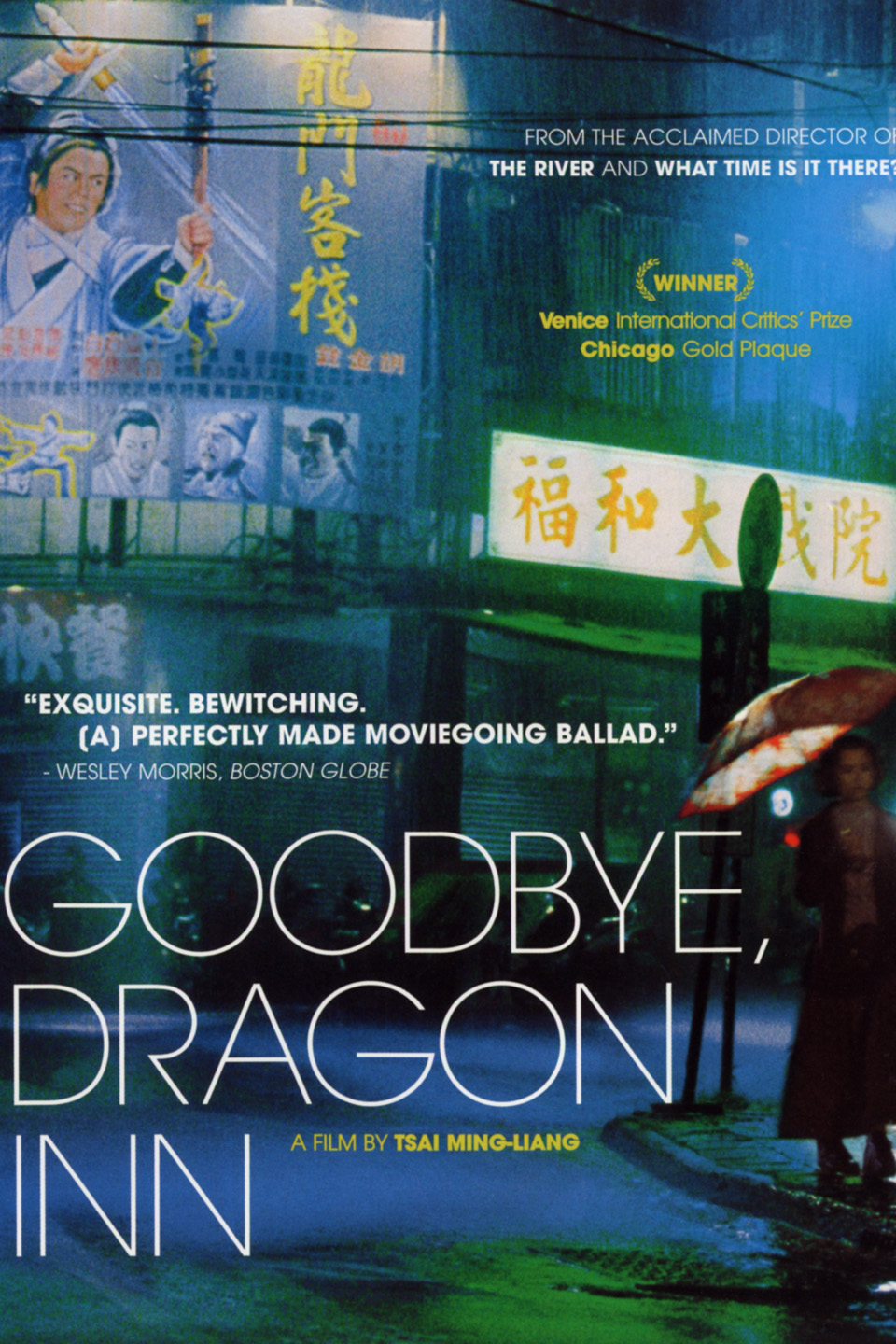
Goodbye Dragon Inn - (Dir. Tsai Ming-Liang, 2003)


(Reviewed 5/5 on letterboxd in Oct 2016)

"No one goes to the movies any more", remarks one of the members of the audience to another towards the end of the film. They happen to be only two of the three who sat through the entire film (King Hu's Dragon Inn); the third being a child. There is also a good reason why they sat through it which I will not reveal. Tsai clearly seems to wax nostalgic about the ritual of watching films at single screen theatre's. It was something more than just spending some of the extra bucks that yuppies make today.
"The theatre is haunted", says one of the many men smoking around the deserted premises of the theatre. You never figure out which of these might be ghosts but clearly the theatre has its own spirit as we see the characters roaming around the semi lit corridors. The rickety sounds of their footsteps, the distant echos of the movie playing on the screen, the incessant rain, the loneliness; all seem to add to the haunting personality of this decrepit yet majestic theatre. As with so many Tsai movies, there is a Tatiesque "lame" and "gay" joke running through the entire length of the film and finally you are also left with the possibility of a deeply affecting story of unrequited love between two of the characters who run this theatre. Clearly, Tsai loves to titillate us with possibilities both on and off screen that make his films so magical.
Finally, if you are one of those critical of the long shot aesthetic, you absolutely must watch this film. It has perhaps the greatest compilation of static long shots I have ever seen. All in all, this is clearly one of those films with the imprint of a genius at work.

Saturday, July 30, 2016

The Man Who Shot Liberty Valance (Dir. John Ford, 1962)


(Reviewed 4.5/5 on letterboxd in July 2016)

"Cold blooded murder, but I can live with it" - Tom Doniphon
This is perhaps Ford's most nuanced western chronicling the history of America. According to Ford, civilization was not only won by principled educated non violent men. There were also the gun totting ranchers and cowhands, some of whom willingly or unwillingly went into oblivion but not without playing important if controversial roles of defeating the Liberty Valance's of the land. As usual, Ford shines the brightest in the most unassuming scenes; whether it is the drunk newspaperman breaking into a monologue in his office or the village belle picking up books from the floor and contemplating after an interrupted school session. Ford just keeps getting better on every re-watch.

Sunday, July 17, 2016

La Commune (Dir. Peter Watkins, 2000)


(Reviewed 5/5 on letterboxd in July 2016)

Too many great and relevant points made in this movie, not only in its subject matter but also in the revolutionary style of filmmaking -whether it be women's rights or exposing the lie that is the media or an unexpectedly great Gandhi quote on "not building walls" (I am speaking to you Mr. Trump) or the fact that every actor had an opinion and was allowed to express it.
What was most heartening and perhaps the most important takeaway from the film is the search for the real meaning of democracy. Democracy is not only about voting for a representative but it is also about taking individual responsibility for everything that happens under it whether good or bad. A dialogue towards the end of the movie between the aggressor military man and a Commune woman summarizes this beautifully:

 - "What is your name?"
 - "LA COMMUNE"

 - "What did you do in the Commune?"
 - "EVERYTHING!"

Sunday, July 3, 2016

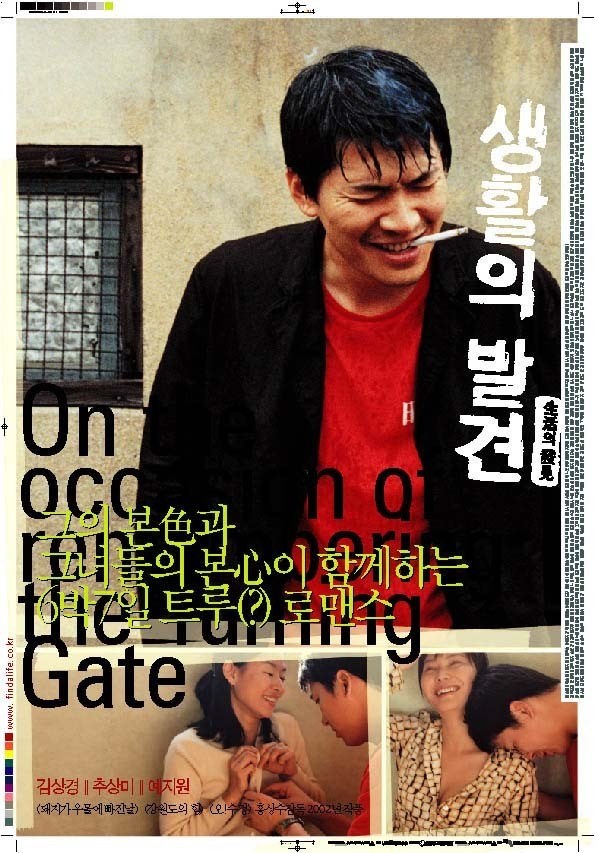
On the Occassion of Remembering the Turning Gate (Dir. Hong Sang Soo, 2002)

(Reviewed 4.5/5 on letterboxd in July 2016)

On the face of it, this film has several of the standard Hong tropes. Some guy from the art film fraternity, hanging around in a strange town, developing messy romantic relationships with strangers, bonding over drinking and smoking etc. At the same time, this is perhaps one of the saddest of Hong's films. The act of turning away from your loved one may seem to appear as an act of cowardice or unromantic to say the least, but that practical act can sometimes save a lot of heartburn. The legend of the turning gate and the reenactment of it in this film somehow hits me at an emotional level that few films have done before.

Saturday, June 11, 2016

Gaman (Dir. Muzaffar Ali, 1978)

(Reviewed 4/5 in May 2016 on letterboxd.com)


More than twenty five years after Roy's Do Bigha Zameen, Muzaffar Ali revisits the subject of migration from the villages to the cities for making a livelihood. Unfortunately, things haven't changed much. Poverty still remains the main oppressor that people spend their entire lives fighting. Hopes, love and dreams are crushed everyday but there is no time to stop. The loved ones back home, oblivious to the condition in the cities, are still pining for a reunion.

On The Beat (Dir. Ning Ying, 1995)


(Reviewed 4.5/5 in May 2016 on letterboxd.com)

Funny, satirical, humanistic and thought provoking; this film is easily one of the greatest film's on the police force I have seen. When the common man on the street starts making more sense than the beat constable, you know there is something wrong with the system. The Beijing police force in Ning Ying's film, sing song's in praise of Chairman Mao and take pride in their procedures but they don't realize how anachronistic and foolish they are starting to appear to the public. The last resort for them to enforce their rules is to growl at people and if by chance they use force, they get suspended having violated one of their own rules. Under-equipped, under-staffed, over-worked and under-paid, you cannot help feel sympathy for these well meaning yet misunderstood police officers, even as you laugh at them.

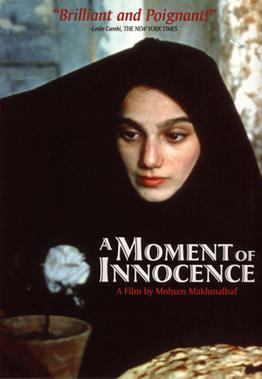
A Moment of Innocence (Dir. Mohsen Makhmalbaf, 1996)


(Reviewed 4.5/5 in January 2016 on letterboxd.com)
"Isn't there a better way to save mankind than to stab a policeman on duty?", asks the young Makhmalbaf to the old. Maybe, but that's not how the old Makhmalbaf would have it. Neither would the policeman who got stabbed some twenty years ago.
Makhmalbaf's film about a film recreates a comical and emotional event of his younger self when in a moment of rebellion, he supposedly stabbed a policeman by using his cousin sister as a distraction. As irreverant an act that may appear, like the quintessential Wodehousean - stealing the policeman's helmet on boat race night, there is an incredible emotional story behind it as the policeman who is now friends with Makhmalbaf cannot forget this moment in his life. He regrets not being able to give the girl a white flower and Makhmalbaf perhaps regrets having stabbed him. The beautiful finale of this film tries to reconcile with the past when instead of a stabbing, there is a flower pot and a piece of bread that confront each other.